




Private schools operate outside government salary scales, so they can demand far higher baseline qualifications. A typical job advertisement at Limassol english schools requires a relevant Bachelor’s degree (minimum 2:1), a recognized teaching qualification (PGCE, QTS, or international equivalent), and at least three years of proven classroom experience. Many institutions, including Trinity school, now list a Master’s degree as “preferred” or “required” for senior positions. Native or C2-level English is non-negotiable in any primary school Limassol that follows British, IB, or American curricula.
Advanced Degrees and Certifications
Roughly 60 – 80% of faculty in leading private schools hold postgraduate qualifications – numbers rarely seen in public systems. Teachers routinely possess M.Ed., MA in Education Leadership, subject-specific Master’s (MSc Physics, MPhil History), or specialist endorsements such as IB Category 2/3 training, Apple Distinguished Educator, Google Certified Trainer, or Microsoft Innovative Educator Expert. Trinity school and peer Limassol english schools actively fund these credentials, viewing them as investments in teaching quality rather than personal perks.
Professional Development Programs
Continuous training is built into the calendar. Private schools close for 10 – 15 in-service days annually and allocate individual CPD budgets (€800 – €2,500 per teacher). Staff attend category workshops in Geneva (IB), Bethesda (AP), or London (Cambridge), plus local conferences on mindfulness, differentiation, and assessment for learning. Primary school Limassol teams, for example, receive yearly training in phonics (Jolly Phonics, Read Write Inc.) and inquiry-based early-years pedagogy (Reggio Emilia, Forest School).
Impact on Classroom Experience
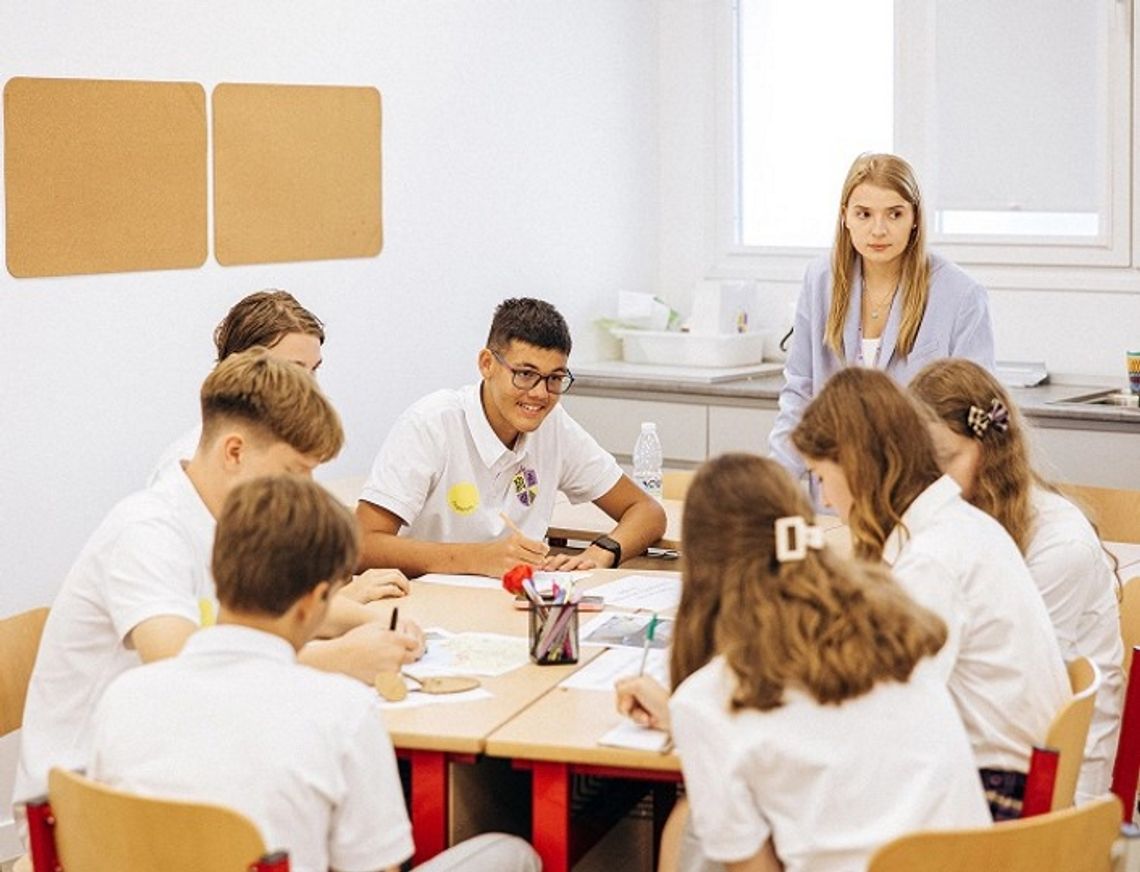
The results are visible daily. A Year 5 science lesson at Trinity school might be delivered by a teacher with a PhD in marine biology who spent summers researching coral reefs – passion and expertise that textbooks cannot replicate. Small classes (rarely above 20) combined with deep subject knowledge allow real-time differentiation: gifted mathematicians explore university-level problems while others master fundamentals with the same teacher in the same room.
Comparing to Public Schools
Public-school teachers are often excellent but constrained by larger classes (30 – 35), heavier administrative loads, and limited CPD funding. Private-school teachers typically spend 70 – 80% of their time on direct instruction and planning versus 45 – 55% in many public settings, producing noticeably stronger student outcomes in external examinations and university placement.
Here is a list of typical qualification advantages found in reputable Limassol english schools and similar private institutions:
- 65 – 85% of faculty holding Master’s degrees or higher
- 100% completion of subject-specific certification (IB, CIE, AP) before teaching examined courses
- Average 12 – 18 days of paid professional development per academic year
- Mandatory child-protection, first-aid, and mental-health first-aid renewal every 24 months
- Regular peer observation and lesson-study cycles (4 – 6 per term) with written feedback
These standards are not exceptional – they are the norm across respected primary school Limassol and secondary Limassol english schools that compete internationally. Whether at Trinity school or any comparable institution, parents quickly notice the difference a highly trained, continuously developing teacher makes in their child’s confidence and achievement.
Tips for Parents
When touring schools, ask to see the faculty qualification summary (most proudly display it). Inquire about turnover rate (under 8% is healthy), average years of experience (8 – 15 is strong), and how many teachers have examiner or workshop-leader status with Cambridge, IB, or Edexcel. The answers reveal whether excellence in teaching is genuine priority or marketing claim.




Napisz komentarz
Komentarze